
The Best Deli Meats for an Italian Hoagie
By The Sandwich App · Updated June 2026
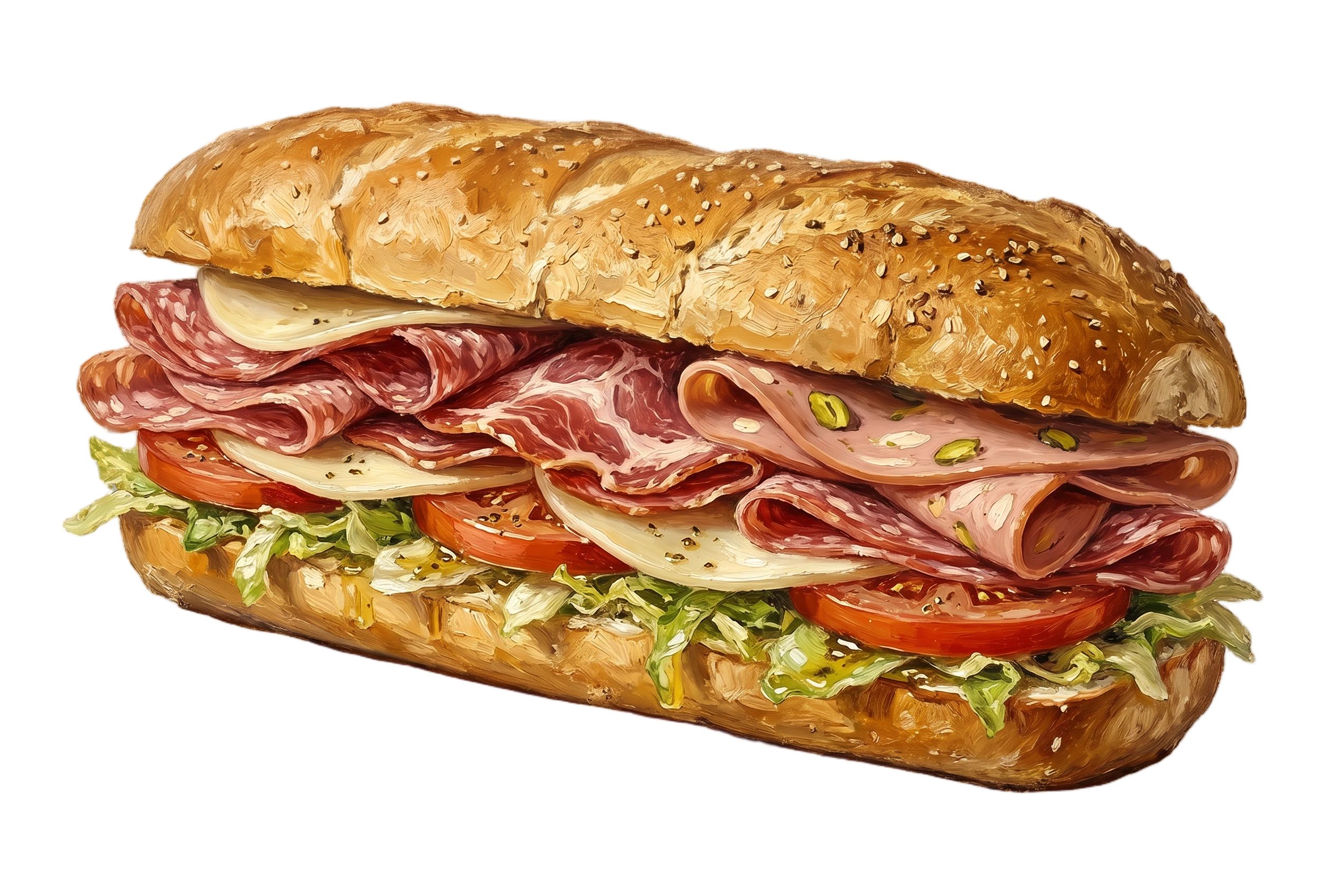
We've built this sandwich more times than we can count, and we keep landing on the same lesson: an Italian hoagie lives or dies on the meat counter, not the recipe card. Three or four cured meats, sliced thin, do more work than a pile of any single one. So we spent a few weeks ordering the usual suspects at our local deli, weighing the ratios, and arguing about hot versus sweet. What follows is the lineup we actually reach for, why each meat earns its spot, and the small handling choices that separate a great hoagie from a soggy, overstuffed one.
The classic trio: salami, capicola, mortadella
Start here. If you only buy three meats, buy these. Genoa salami is the backbone, coarsely ground pork seasoned with garlic and a little red wine, with a firm chew and a tang that holds up against everything else on the bread. It's the flavor most people picture when they think "Italian sub."
Capicola is the one worth fussing over. It's a whole-muscle cured pork cut from the neck and upper shoulder, roughly 70 percent lean to 30 percent fat, which is why a thin slice almost melts. You'll see it two ways at the counter: sweet, cured with black pepper, and hot, dialed up with red pepper or paprika. We lean hot for the heat that builds slice over slice, but a sweet hoagie is no less authentic. Ask which the deli has before you commit.
Mortadella is the soft, gentle one in the group, a finely emulsified pork cold cut from Bologna, often studded with pistachios and cubes of fat. It tastes faintly of warm spice and brings a creamy texture that balances the firmer salami. Skip it and the sandwich gets harsh; include it and everything rounds out.
The upgrades: prosciutto, soppressata, and a good ham
Once the trio is settled, this is where you make the hoagie yours. Prosciutto is dry-cured ham, ideally Prosciutto di Parma or San Daniele, sliced so thin it's nearly translucent. It's salty and silky and a little floral. A couple of folds go a long way; pile it on and it just clumps.
Soppressata is dry-cured salami with more attitude than Genoa, coarser in texture and usually spicier, sold in mild and hot. We use it as an accent, two or three slices, to give the sandwich an edge. If you've already gone hot on the capicola, a mild soppressata keeps things from tipping over.
A simple cooked ham, like a deli capicola-adjacent cottage ham or even a plain boiled ham, isn't traditional everywhere but it adds mild, juicy bulk that some delis swear by. It's the budget-friendly extender. Optional, never the star.
The cheese isn't optional: sharp provolone
One cheese, and it's provolone. The question is only how sharp. Mild provolone is creamy and inoffensive. Aged sharp provolone is funkier, tangier, and stands up to all that salt and fat, which is why it's our default. Lay it directly against the meats so its richness reads in every bite.
Resist the urge to reach for fresh mozzarella here. It's a beautiful cheese, but it's watery and quiet, and it disappears under cured pork. Save it for a Caprese.
Why thin slicing and meat-to-bread ratio decide everything
This is the part most home cooks skip, and it's the part that matters most. Ask for everything sliced thin, almost shaved. Thin slices drape and fold, layering into something you can bite cleanly through. Thick slices fight back; you pull the whole stack out with the first bite.
Ratio is the other half. A hoagie roll should hold the meat, not get buried by it. We aim for a third to a half pound of meat total across three or four kinds on a standard 10 to 12 inch roll, fanned out so each layer overlaps. Overstuff it and the bread can't do its job, and the whole thing slides apart in your hands. The bread is structure, not filler, so respect the balance.
Building it: oil, vinegar, hots, and the order of layering
Order matters more than people think. We build bottom-up: cheese first against the bottom bread, then the meats fanned over it, then crisp shredded lettuce, thin tomato, raw onion if you like, and the hots and dressing on top.
For dressing, keep it old-school. Good olive oil and red wine vinegar, a pinch of salt, dried oregano. Some delis add a swipe of mayo; that's a regional thing and a matter of taste. Hot peppers, whether sliced cherry peppers, banana peppers, or a spoon of giardiniera, bring acid and crunch that cut the fat.
One trick we use every time: dress the lettuce and tomato, not the bread. Oil and vinegar sitting straight on the roll soak in and turn it to mush before you've taken a bite. Let the vegetables carry the dressing and the bread stays intact.
- Bottom bread
- Sharp provolone
- Capicola, then salami, then mortadella, fanned and overlapping
- Prosciutto and soppressata as accents
- Shredded lettuce and thin tomato (dressed)
- Onion and hot peppers
- Oil, vinegar, oregano, salt
- Top bread
Frequently asked questions
What are the essential meats for an Italian hoagie?
The core trio is Genoa salami, capicola, and mortadella. From there, most delis add prosciutto and soppressata, and some include a mild cooked ham for bulk. Three to four cured meats sliced thin beats a thick pile of any single one.
Should I use hot or sweet capicola?
Both are authentic. Sweet capicola is cured with black pepper and tastes mild and round; hot capicola is cured with red pepper or paprika and brings heat that builds. If you want spice, go hot. If you're already using hot soppressata or lots of hot peppers, sweet capicola keeps the sandwich from getting overwhelming.
What cheese goes on an Italian hoagie?
Provolone, full stop. Sharp, aged provolone stands up to the salt and fat of the cured meats better than mild. Skip fresh mozzarella here; it's watery and gets lost under the pork.
How thick should the deli slice the meat?
Thin, almost shaved. Thin slices fold and layer so you can bite through cleanly, and they let you build height without overstuffing. Thick slices pull out of the roll in one chunk and throw off the meat-to-bread balance.
How much meat should go on one hoagie?
Roughly a third to a half pound total across three or four meats on a 10 to 12 inch roll. The bread is there to hold the sandwich together, so don't bury it. Fan the slices and overlap them rather than stacking a thick wall of meat.